- 135 Matheson Blvd W Entrance D, Unit 201 B, Mississauga, ON
- 647-202-8703
- info@cyrenecosmetic.com
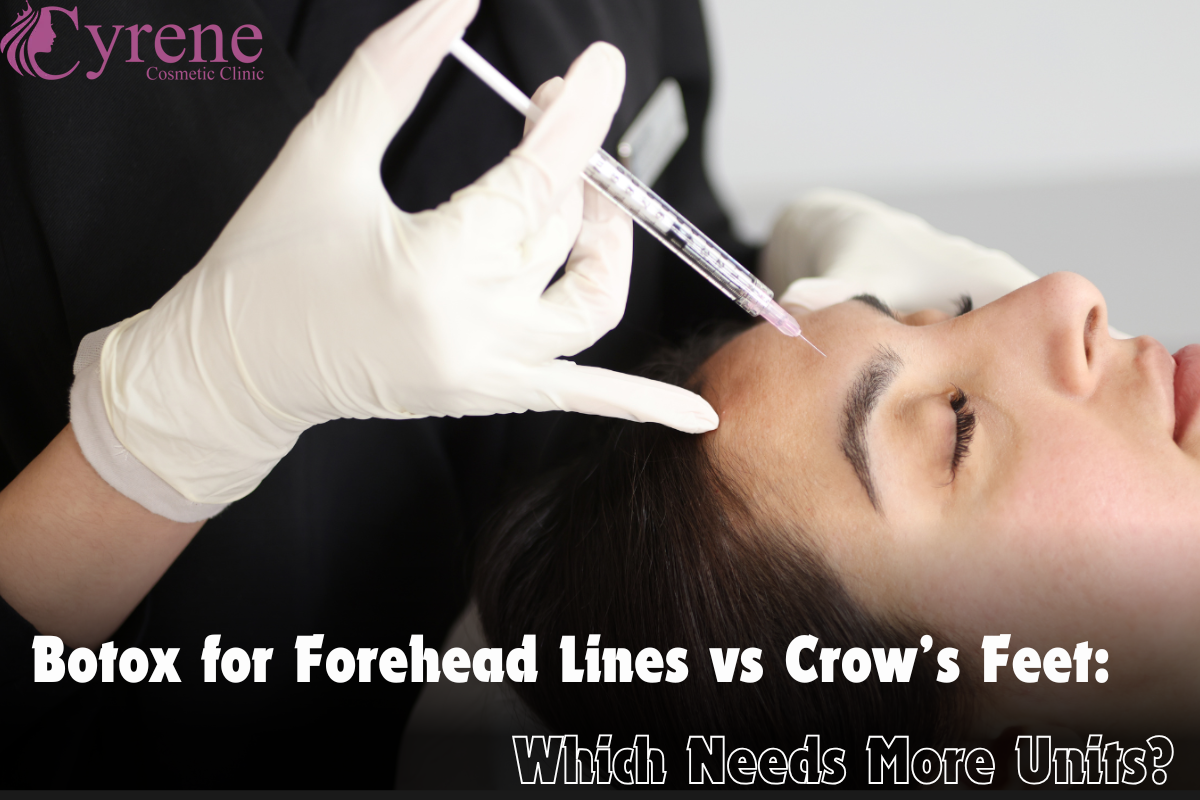
When people start considering Botox, two of the most common areas they want to treat are the forehead and the crow’s feet. These lines tend to appear first because they form from repeated facial movements like smiling, frowning, and raising the eyebrows. Many patients often ask a simple question before getting treatment: which area needs more Botox units—the forehead or crow’s feet?
Understanding how many botox crow’s feet units or forehead units are typically required can help you estimate treatment costs and set realistic expectations. While the exact number depends on individual factors such as muscle strength, age, and skin condition, there are common ranges that most cosmetic clinics follow. At CYRENE COSMETIC CLINIC, experienced practitioners assess your unique facial anatomy to recommend the most effective and natural-looking dosage.
In this guide, we’ll explain the difference between Botox for forehead lines and crow’s feet, how many units are usually required, and what affects the overall botox forehead lines cost.
Forehead lines are the horizontal wrinkles that appear when you raise your eyebrows. Over time, these expression lines can become permanent even when your face is at rest.
These lines form because of the frontalis muscle, which lifts the eyebrows. Every time you show surprise, concentrate, or raise your eyebrows, this muscle contracts. After years of repeated movement, the skin gradually develops visible creases.
Botox works by relaxing this muscle so that it cannot contract as strongly. As a result, the skin above it smooths out and wrinkles become less noticeable.
Most patients require 10 to 20 units of Botox for the forehead area. However, the number can vary depending on:
Because the forehead is a large surface area, injections are usually spread across multiple small points to create a natural and balanced result.
Crow’s feet are the small lines that appear at the outer corners of the eyes. They become more noticeable when you smile or squint.
These wrinkles are caused by the orbicularis oculi muscle, which surrounds the eye. Since we blink and smile constantly, this muscle is very active, making crow’s feet one of the earliest signs of aging.
Botox softens these lines by relaxing the muscle activity around the eyes.
When it comes to botox crow’s feet units, most patients typically need 12 to 24 units total. This is usually divided equally between both sides of the face.
For example:
The injections are placed in small amounts around the outer eye area to reduce wrinkles without affecting natural facial expressions.
When comparing forehead lines and crow’s feet, crow’s feet often require slightly more units overall.
Here’s a general comparison:
| Treatment Area | Typical Units |
| Forehead Lines | 10 – 20 units |
| Crow’s Feet | 12 – 24 units |
However, this is not a strict rule. Some people have stronger forehead muscles and may require more units there. Others may have deeper crow’s feet due to frequent smiling or sun exposure.
The best way to determine the correct number of botox crow’s feet units or forehead injections is through a professional consultation.
There are a few reasons why crow’s feet treatments may require more Botox.
The muscles around the eyes are used constantly throughout the day. Smiling, squinting, and blinking repeatedly activate these muscles, which can create deeper lines over time.
Crow’s feet are usually treated with 3 injection points per side, meaning several small doses are required to evenly relax the muscle.
The skin around the eyes is thinner and more delicate. To maintain natural movement while still smoothing wrinkles, providers often use carefully distributed units.
The number of units needed for either area isn’t the same for every person. Several factors can influence how much Botox is required.
People with stronger facial muscles usually need more Botox units to achieve visible results.
As wrinkles deepen with age, slightly higher doses may be necessary.
Men generally have stronger facial muscles than women and may need more units.
Some patients prefer subtle results, while others want very smooth skin. The desired outcome affects how many units are used.
Patients who regularly receive Botox sometimes require fewer units over time because muscles gradually weaken.
The botox forehead lines cost depends largely on how many units are needed and the clinic’s pricing per unit.
Most clinics charge per unit, with prices ranging between $10 and $20 per unit depending on location and provider expertise.
For example:
Therefore, the average botox forehead lines cost usually falls between $150 and $350.
Crow’s feet treatment may cost slightly more if more units are required.
Many patients choose to treat both areas at the same time. This approach creates a more balanced and refreshed appearance.
If both areas are treated in one session, the total units may look something like this:
Treating both areas together often produces smoother facial expressions without making the face look frozen.
Both forehead and crow’s feet treatments typically last 3 to 4 months.
After that time, muscle activity slowly returns and wrinkles may gradually reappear. Regular treatments help maintain smoother skin and can even prevent deeper lines from forming.
Many patients schedule maintenance sessions 3 times per year to keep consistent results.
Getting natural-looking results depends heavily on the skill of the injector. An experienced practitioner understands facial anatomy and knows how to balance injections across different areas.
When choosing a clinic, consider the following:
A qualified provider will evaluate your facial muscles and recommend the right number of botox crow’s feet units or forehead injections based on your individual needs.
Both forehead lines and crow’s feet are among the most common areas treated with Botox. While the forehead typically requires 10 to 20 units, crow’s feet often need 12 to 24 units in total.
However, the exact amount varies from person to person. Factors such as muscle strength, wrinkle depth, and treatment goals all play a role in determining the correct dosage.
Understanding typical botox crow’s feet units and the expected botox forehead lines cost can help you plan your treatment and budget. The most accurate way to determine your ideal dosage is by consulting an experienced cosmetic professional who can tailor the treatment to your facial structure.
With the right approach, Botox can smooth wrinkles, soften expressions, and give you a naturally refreshed appearance.
Results usually last about 3–4 months.





Comments are closed